
Introduction
In drilling fluid systems, the shale shaker is the primary solids control device. Its vibration profile is the critical factor determining the efficiency of solids removal. Understanding how amplitude, frequency, and motion affect particle conveyance and liquid throughput is essential for optimizing wellbore cleaning, minimizing fluid losses, and protecting downstream equipment.
Technical Working Principle
Shale shakers separate solids via vibratory motion imparted to a screen deck. This motion creates acceleration (G-force) that stratifies the drilling fluid, allowing finer particles to pass through the screen mesh while conveying larger cuttings toward the discharge end. The key parameters are:
- Amplitude: Peak-to-peak screen displacement, typically 3-6 mm, dictates conveyance speed.
- Frequency: Vibrations per minute (VPM), often 3,600-4,200, influences fluid throughput and screen blinding.
- Motion: Linear, elliptical, or balanced elliptical patterns control particle distribution and screen wear.
Key Components and Specifications
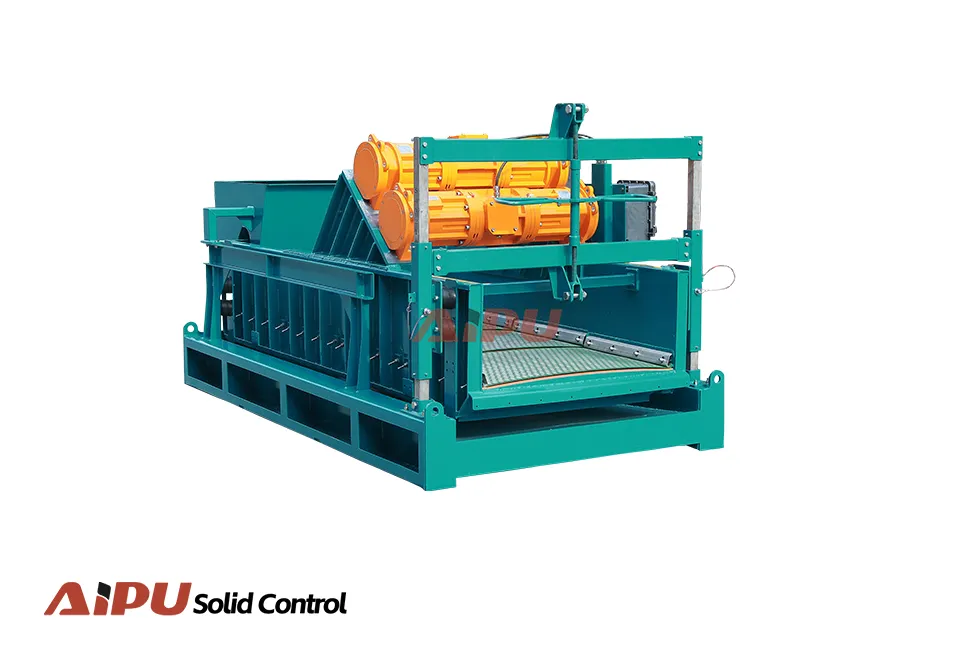
Modern shale shakers feature robust components to generate precise vibration. Standard specifications include high-G, dual-motor vibrators generating up to 7.3 G's, polyurethane screen tensioning systems, and adjustable motor mounts for tuning vibration angle. Deck slope, typically 0-5 degrees, works in concert with vibration to optimize retention time and drying.
Operational Benefits of Optimized Vibration
Properly tuned vibration directly impacts drilling economics and performance.
- Enhanced Solids Removal: Efficient separation of fine solids maintains low mud weight and rheology.
- Reduced Fluid Loss: Effective screening minimizes valuable drilling fluid discard with cuttings.
- Extended Screen Life: Correct G-force and motion reduce premature blinding and mechanical fatigue.
- Downstream Protection: Adequate primary removal lowers the load on desanders and desilters.
Industry Applications and Trends
Vibration technology is tailored to specific applications. High-frequency, linear motion shakers are standard for weighted muds in deepwater operations, while balanced elliptical motion units excel in sticky clay environments. The trend toward finer mesh screens (down to 250 mesh) for improved solids control demands precise, high-G vibration systems to maintain acceptable fluid processing rates.
Maintenance Considerations
Consistent vibration performance requires diligent maintenance. Regularly check motor mounts and isolators for wear, as degradation alters the designed motion. Monitor vibration consistency across the deck; uneven G-forces indicate imbalance or structural issues. Adhere to manufacturer torque specifications for screen panel installation to ensure uniform tension and vibration transmission.
Conclusion
Shale shaker vibration is not merely a mechanical function but a fundamental process variable in solids control. By meticulously managing amplitude, frequency, and motion, drilling engineers can significantly enhance separation efficiency, reduce non-productive time associated with screen changes, and achieve substantial cost savings through optimized drilling fluid management and waste minimization.