
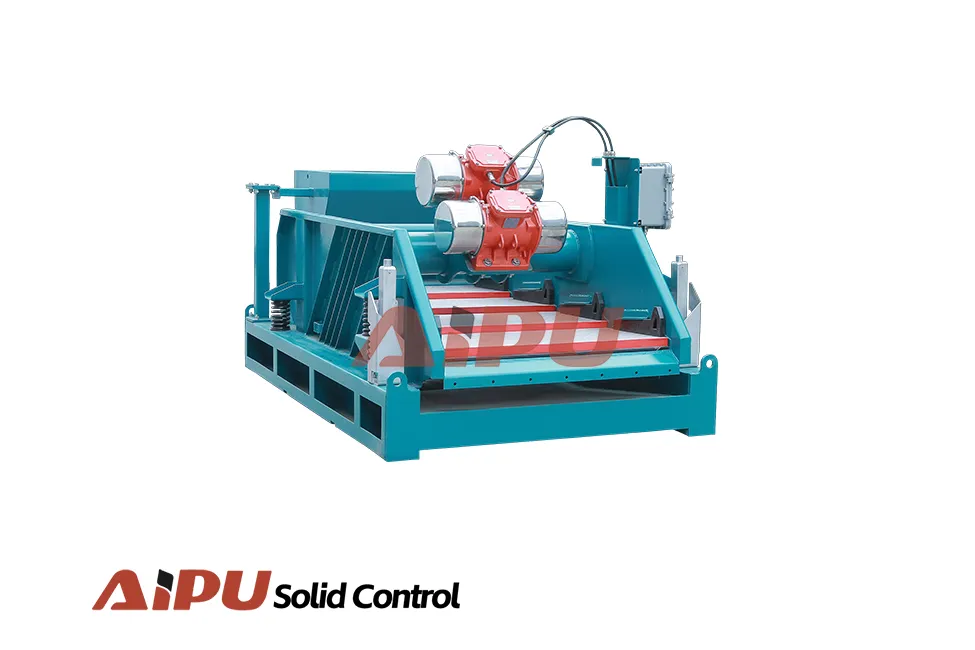
In the world of drilling operations, efficient solids control is essential for maintaining drilling fluid properties, reducing operational costs, and ensuring environmental compliance. At the heart of every solids control system lies a critical piece of equipment: the shale shaker. This article explores the fundamental functions, working principles, and importance of shale shakers in modern drilling operations.
Shale shakers are primary solids control devices designed to remove large solid particles from drilling fluid (also known as mud) as it returns to the surface during drilling operations. They are the first line of defense in the solids control process, responsible for removing the majority of drilled solids before the fluid proceeds to secondary and tertiary separation equipment.
Core Functions of a Shale Shaker
The primary function of a shale shaker is to separate drilled cuttings and other solid particles from drilling fluid. This separation process serves several critical purposes:
- Removal of Drilled Solids: As the drill bit penetrates the earth's surface, it generates a mixture of solid particles and drilling fluid. The shale shaker removes these solids, preventing them from re-entering the drilling system.
- Drilling Fluid Recovery: By separating solids, shale shakers help recover valuable drilling fluid, reducing the need for constant replacement and lowering operational costs.
- Protection of Downstream Equipment: By removing large particles, shale shakers prevent damage to expensive downstream equipment such as centrifuges, desanders, and desilters.
- Maintaining Fluid Properties: Clean drilling fluid maintains its desired properties, ensuring efficient drilling performance and reducing the risk of wellbore instability.
- Environmental Compliance: Effective solids control minimizes the volume of waste generated, making it easier to comply with environmental regulations.
Working Principle of a Shale Shaker
Shale shakers operate on the principle of mechanical vibration combined with screen separation. The key components include:
- Vibrating Deck: The deck holds the screen panels and generates high-frequency vibrations to facilitate solids separation.
- Screen Panels: These are perforated or woven mesh panels that allow fluid to pass through while retaining solid particles. Screen size is measured in mesh count, with higher mesh counts removing smaller particles.
- Vibration Motors: These generate the mechanical vibrations that transfer to the deck and screen panels.
- Feed Box: Drilling fluid is introduced to the shale shaker through the feed box, which distributes the fluid evenly across the screen surface.
- Discharge Chute: Separated solids are discharged from the shaker through the discharge chute for further processing or disposal.
When drilling fluid enters the feed box, it is distributed evenly across the screen surface. The vibrating deck causes the fluid to flow over the screen while simultaneously agitating the solids. Larger solid particles are retained on the screen surface and transported to the discharge chute, while the cleaned fluid passes through the screen and is collected for reuse.
Types of Shale Shakers
There are several types of shale shakers available, each designed for specific drilling conditions and applications:
- Linear Motion Shakers: These shakers use linear vibration to transport solids across the screen. They are versatile and suitable for most drilling applications.
- Dual Motion Shakers: These shakers can switch between linear and elliptical motion, providing flexibility for different drilling conditions.
- Vacuum Shakers: These shakers use a vacuum system to enhance solids separation, particularly in high-gas environments.
- Tandem Shakers: These are multi-unit systems designed for high-volume drilling operations, capable of processing large quantities of drilling fluid.
- Double Deck Shakers: These shakers feature two sets of screens stacked vertically, allowing for enhanced solids separation in a single unit.
Importance of Shale Shaker Efficiency
The efficiency of a shale shaker directly impacts the overall performance of the solids control system and the drilling operation as a whole. Key factors affecting efficiency include:
- Screen Selection: Choosing the right screen mesh size for the specific drilling conditions is crucial for optimal solids separation.
- Vibration Intensity: The amplitude and frequency of vibration must be properly adjusted to ensure effective solids transport and fluid separation.
- Deck Angle: The angle of the shaker deck affects the fluid flow rate and residence time on the screen, impacting separation efficiency.
- Feed Rate: The fluid feed rate must be matched to the shaker's capacity to prevent screen overloading.
- Maintenance: Regular maintenance, including screen replacement and vibration motor inspection, ensures consistent performance.
Applications of Shale Shakers
Shale shakers are used in a wide range of drilling applications, including:
- Oil and gas drilling (onshore and offshore)
- Horizontal directional drilling (HDD)
- Geothermal drilling
- Mineral exploration
- Construction and foundation drilling
- Mining operations
Conclusion
Shale shakers play a critical role in modern drilling operations, serving as the first line of defense in solids control. By effectively separating drilled cuttings from drilling fluid, they help maintain fluid properties, protect downstream equipment, reduce operational costs, and ensure environmental compliance.
As drilling operations continue to evolve, shale shaker technology has advanced to meet the challenges of more demanding drilling conditions. Modern shale shakers feature innovative designs, high-efficiency screens, and advanced vibration systems, providing enhanced performance and reliability for today's drilling operations.
Understanding what a shale shaker does and its importance in the solids control process is essential for anyone involved in drilling operations. By investing in high-quality shale shakers and optimizing their performance, operators can achieve significant improvements in drilling efficiency and cost-effectiveness.