
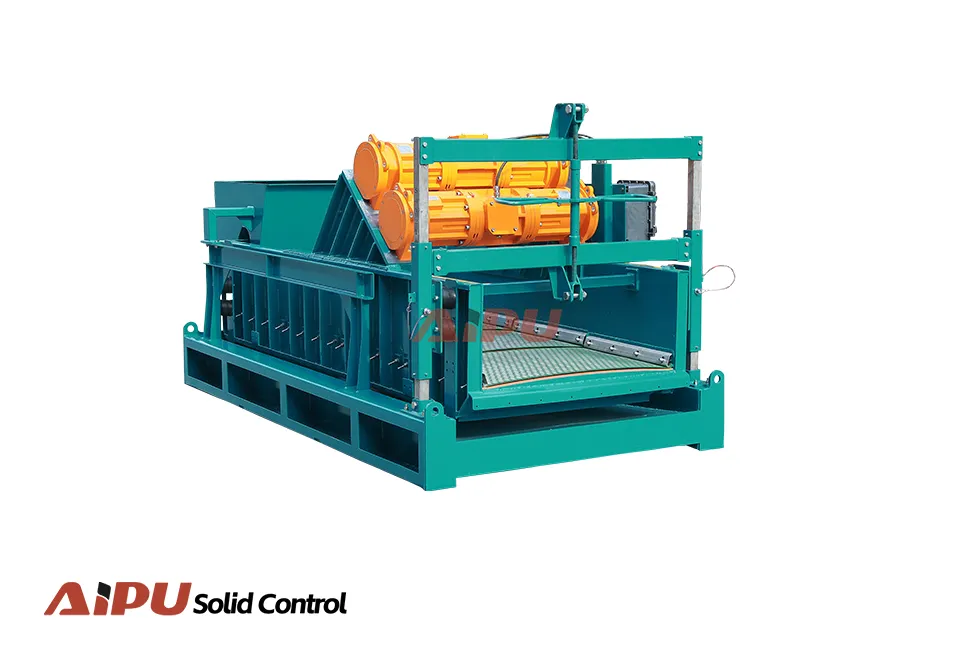
Introduction to shale shaker Technology
As the primary and most critical solids control equipment on a drilling rig, the shale shaker sets the performance benchmark for the entire mud system. Its primary function is to remove large drilled solids—typically those exceeding 74 microns—from the drilling fluid (mud) using high-frequency vibration and screen panels. Efficient shale shaker operation is paramount for maintaining mud properties, protecting downstream equipment, reducing overall drilling costs, and ensuring wellbore stability.
Technical Working Principle
Shale shakers operate on the principle of vibratory screening. A motor-driven vibrator imparts a high-frequency, low-amplitude motion to a basket deck lined with replaceable mesh screens. As the fluid-solids mixture (the "mud") flows onto the screen surface, this G-force motion stratifies the material. The liquid and fine particles pass through the screen mesh (becoming "clean mud"), while the larger drilled solids are conveyed off the screen deck as discard. Modern units utilize linear, elliptical, or balanced elliptical motion patterns to optimize conveyance and liquid throughput.
Key Components and Specifications
A standard shale shaker comprises several critical components. Key specifications that drilling engineers must evaluate include screen panel mesh count, vibrator motor G-force, deck angle, and flow capacity.
- Vibrator Assembly: Generates the screening motion, typically producing 4-7 Gs of force.
- Screen Basket: Holds the screen panels; often adjustable for deck angle (0-6 degrees).
- Screen Panels: Precision mesh (API 80 to API 200+), the most consumable part, critical for separation.
- Skid Base & Mud Box: Provides structural integrity and directs fluid flow.
Operational Benefits
Properly sized and operated shale shakers deliver substantial economic and operational advantages. They directly reduce total well costs by preserving valuable drilling fluid—often the most expensive consumable on a well—and minimizing waste disposal volumes. By removing abrasive solids early, they extend the service life of pumps, drill bits, and downstream solids control equipment like desanders and desilters, reducing non-productive time (NPT) associated with equipment failure.
Industry Applications
Shale shakers are deployed on every land and offshore drilling rig. Their application is tailored to the specific drilling phase and formation type. In high-pressure, high-temperature (HPHT) wells, fine-screen shakers (API 200+) are critical for maintaining ultra-low solids content. In top-hole sections with high flow rates, multiple linear motion shakers are run in parallel. The advent of "shaker management" programs, using data from flow meters and screen monitors, optimizes performance across diverse applications from conventional plays to complex geo-steered laterals.
Maintenance Considerations
Proactive maintenance is essential for peak shaker performance and longevity. Daily inspections should focus on screen integrity, vibration isolation mounts, and motor condition. Key maintenance tasks include:
- Regular screen panel replacement based on blinding or wear.
- Checking and tightening all basket and motor bolts.
- Monitoring vibrator motor amperage for signs of imbalance or overload.
- Ensuring feed and discharge points are sealed to prevent mud bypass.
Conclusion
The shale shaker remains the indispensable first line of defense in solids control. Continuous innovation in screen technology, motion dynamics, and automation is driving greater efficiency and reliability. For the drilling engineer, a deep understanding of shale shaker technology—from its core working principle to its practical maintenance—is fundamental to optimizing mud management, controlling costs, and ensuring safe, efficient drilling operations. Investing in proper shaker selection and operation yields direct, measurable returns across the entire well construction process.