
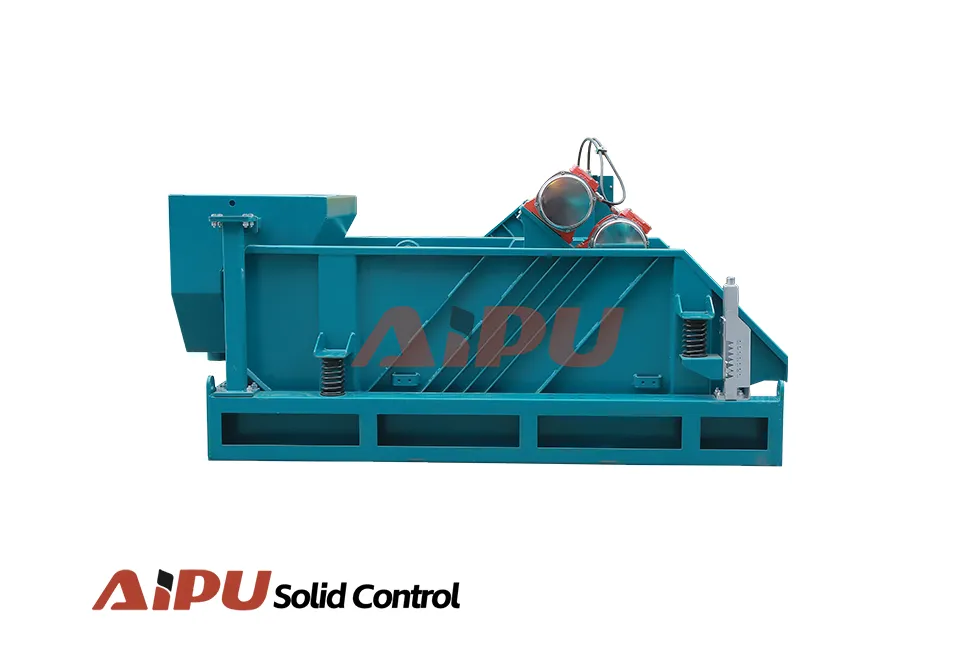
Introduction
In modern drilling operations, efficient solids control is paramount for optimizing mud properties and reducing overall well costs. The shale shaker serves as the primary and most critical stage in the solids control hierarchy. Its primary function is to remove large drilled solids from the drilling fluid using high-frequency vibration, protecting downstream equipment and maintaining the fluid's rheological and density specifications.
Technical Working Principle
Shale shakers operate on the principle of vibratory screening. A high-speed vibrating motor, or an eccentric weight system, imparts a high-frequency, low-amplitude motion to a screen deck. As the fluid-solids mixture (the "mud") flows onto the inclined screen, the vibration stratifies the material, forcing liquid and fine particles through the screen mesh while conveying larger cuttings over the discharge end. Key variables include vibration G-force (typically 4-8 Gs), screen mesh count, and deck angle.
Key Components and Specifications
A modern shale shaker's performance is defined by its core components and their specifications.
- Screen Deck: Often linear or elliptical motion; constructed with composite or steel frames.
- Screening Surface: Layered mesh panels, commonly 80 to 200 API mesh, with finer mesh for weighted muds.
- Vibration System: Dual, balanced vibratory motors generating 4.5-7.0 Gs of acceleration.
- Flow Capacity: Designed to handle full circulation rates, often up to 1200 GPM per unit.
Operational Benefits
The advantages of efficient shale shaker operation translate directly to the rig's economic and technical performance.
- Mud Cost Reduction: Effective removal of drilled solids minimizes dilution and chemical treatment requirements.
- Enhanced Drilling Efficiency: Cleaner mud improves ROP, reduces pump wear, and decreases the risk of differential sticking.
- Downstream Protection: By removing larger solids, it safeguards desanders, desilters, and centrifuges.
- Environmental Compliance: Produces drier cuttings, reducing waste volume and disposal costs.
Industry Applications
Shale shakers are deployed across all drilling environments but are particularly crucial in specific applications.
- High-Pressure, High-Temperature (HPHT) Wells: Precision in maintaining high-density mud properties is critical.
- Directional & Horizontal Drilling: Managing fine solids is essential for lubricity and wellbore stability in long laterals.
- Weighted Mud Systems: Using fine-mesh screens (e.g., 200+) to recover valuable barite while discarding low-gravity solids.
Maintenance Considerations
Proactive maintenance ensures peak shaker performance and longevity. Daily inspections should include checking screen integrity for tears or blinding, verifying motor mounting bolt torque, and ensuring proper tension on the screen panels. Regular lubrication of vibrator bearings and inspection of rubber isolators are essential to prevent catastrophic failure and maintain consistent G-force output.
Conclusion
As the frontline of solids control, the shale shaker is a pivotal technology for cost-effective and efficient drilling. Continuous innovations in screen technology, motion dynamics, and automation are enhancing its capability to handle higher flow rates with finer screening. Investing in proper shaker selection, operation, and maintenance delivers substantial returns through reduced mud costs, improved drilling performance, and minimized non-productive time, solidifying its indispensable role in modern mud treatment systems.