
Introduction
In solids control systems, the shale shaker and desander are sequential, complementary technologies. The shale shaker serves as the primary, high-capacity removal device, while the desander functions as a secondary, finer solids-removal unit. Understanding their distinct roles is critical for optimizing drilling fluid properties, reducing downstream equipment wear, and controlling overall operational costs.
Technical Working Principle
The shale shaker utilizes high-frequency, linear or elliptical motion to convey drilled solids across a vibrating screen mesh. Larger cuttings (typically >74 microns) are separated, with conditioned fluid passing through. The desander, a hydrocyclone, uses centrifugal force. Fluid enters tangentially, creating a vortex that separates heavier solids (typically 15-74 microns) which exit the apex, while cleaned fluid discharges from the overflow.
Key Components and Specifications
Shale shaker specifications focus on screen area, motion type (linear vs. elliptical), and G-force. Modern units feature balanced elliptical motion for dry cuttings and high fluid capacity. Desanders are specified by cone size (e.g., 10-inch) and feed pressure, which dictates cut point. Key components include:
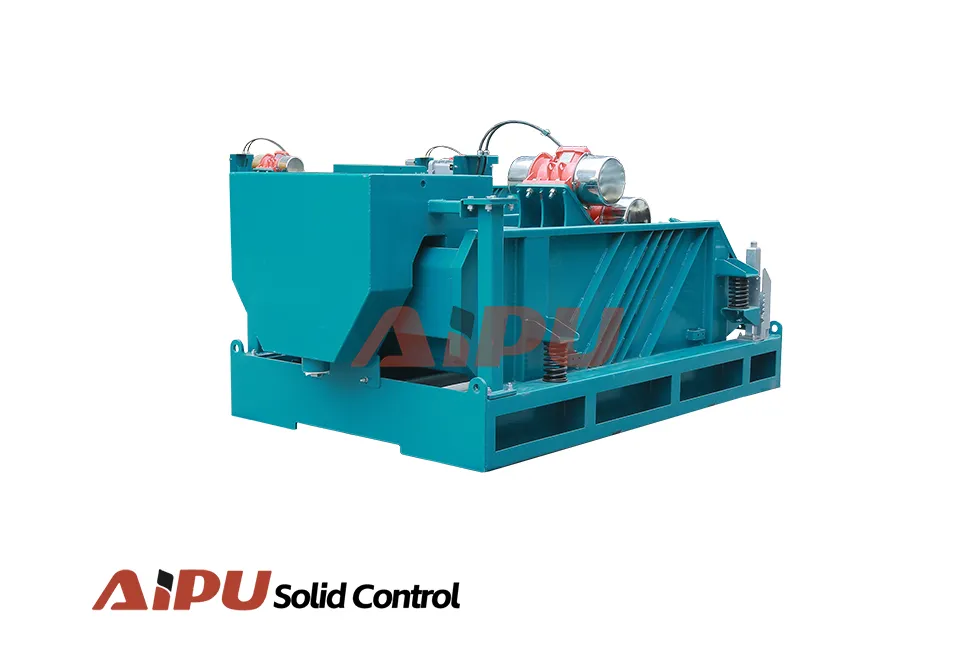
- Shale Shaker: Vibrating basket, screen panels, motors, and feed/distribution system.
- Desander: Array of hydrocyclone cones, feed manifold, underflow (apex) discharge, and supporting tank/hopper.
Operational Benefits
The shale shaker is the workhorse of solids control, providing the first and most critical barrier. Its efficiency directly impacts the lifespan and load on downstream equipment. A high-performance shale shaker with fine screens (e.g., 200 mesh) can significantly reduce the solids loading to desanders, improving their efficiency on finer particles and reducing overall waste volume.
Industry Applications
Shale shaker technology is mandatory on every rig for primary separation. Desander application is more situational, being crucial in:
- Top-hole sections with high solids influx.
- Weighted mud systems where fine sand accumulation is detrimental.
- Operations prior to running desilters or mud cleaners.
Advanced shale shakers with multi-motion capabilities and fine screens are increasingly used to assume some of the traditional desander load.
Maintenance Considerations
Shale shaker maintenance centers on screen integrity, tension, and replacement, along with regular checks of vibration motors and seals. Desander maintenance involves monitoring apex discharge for plugging or excessive fluid loss, inspecting cone liners for erosion, and ensuring proper feed pressure. A well-maintained primary shale shaker reduces abrasive wear on desander cones.
Conclusion
The shale shaker and desander are not competitors but integral stages in a phased solids-removal process. Investing in advanced shale shaker technology with high-G motion and fine screening capabilities provides the greatest return by maximizing primary removal, thereby enhancing the performance and efficiency of secondary equipment like desanders. This synergistic approach minimizes dilution and chemical costs, protects critical drilling equipment, and ensures optimal drilling fluid performance.