
Introduction: Defining the Solids Control Hierarchy
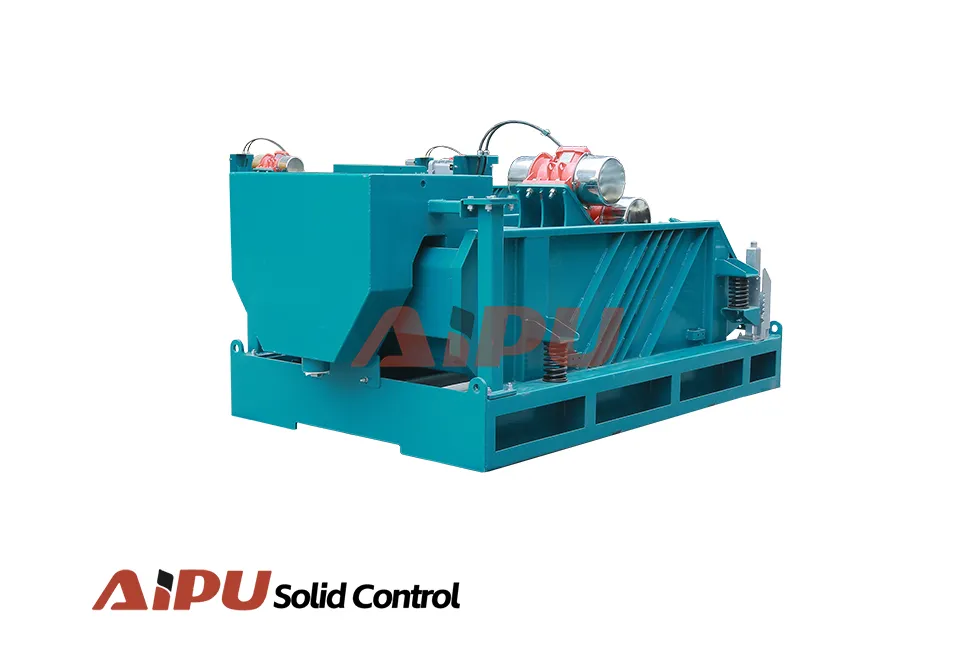
In drilling fluid management, shale shakers and mud cleaners serve distinct, sequential roles within the solids control cascade. The shale shaker is the primary and first-line defense, removing coarse drilled solids. The mud cleaner, a downstream unit, combines desanding and desilting principles to handle finer particles, typically after the shaker and before centrifuges. Understanding their complementary functions is critical for optimizing mud properties and reducing waste disposal costs.
Technical Working Principle: Separation Methodology
The shale shaker utilizes high-frequency, linear motion to convey cuttings across a vibrating screen mesh. Drilling fluid passes through the screen, while larger solids are discharged off the screen's end. A mud cleaner, however, is a hybrid device integrating a desander hydrocyclone (typically 4" or 5") mounted over a fine-mesh shaker. The cyclone removes mid-size solids (15-74 microns), and its underflow is dewatered on the integrated shaker screen to recover valuable liquid phase.
Key Components and Specifications
Key specifications differentiate these systems. Modern shale shakers feature:
- Dual or triple-deck configurations with screen meshes from 20 to 325.
- Adjustable motorized vibrators for G-force optimization (often 4-7 G's).
- Robust, corrosion-resistant construction for harsh environments.
Mud cleaner specifications focus on:
- Hydrocyclone size and number (e.g., 10 x 4" cones).
- Integrated shaker screen mesh, typically finer than the primary shaker.
- Feed pump requirements and pressure (typically 75 psi).
Operational Benefits and Efficiency
The primary shale shaker's benefit is its capacity to handle 100% of the mud returns, protecting downstream equipment. Efficient primary separation directly reduces the load on mud cleaners and centrifuges. The mud cleaner's key benefit is targeted removal of fine, abrasive sands and silts that pass through shaker screens, significantly lowering the solids content and associated wear on pumps, liners, and bit nozzles, leading to substantial cost savings.
Industry Applications and Deployment
Shale shaker technology is mandatory on every rig, used continuously during drilling. Mud cleaners are deployed strategically:
- In weighted mud systems, where centrifuges cannot be used, to remove low-gravity solids.
- When drilling through abrasive sandstone formations to protect equipment.
- For environmental and economic recovery of barite from cyclone underflow.
Maintenance Considerations
Shale shaker maintenance focuses on screen integrity, tension, and vibration system health. Mud cleaners require additional vigilance:
- Monitoring cyclone apex and vortex finder for wear and plugging.
- Ensuring the feed pump maintains correct pressure for optimal separation.
- Managing the integrated shaker screen, which can blind quickly if the underflow is too dense.
Conclusion: A Synergistic Relationship
Comparing a shale shaker to a mud cleaner is not a question of superiority but of sequence and function. The shale shaker is the indispensable workhorse for primary separation, while the mud cleaner is a specialized tool for intermediate, fine-solid removal. Their combined, efficient use is fundamental to maintaining drilling fluid rheology, minimizing dilution, reducing waste, and lowering total well cost, showcasing the layered sophistication of modern solids control technology.