
Introduction: The Critical Role of Portability in Modern Drilling
For mobile drilling rigs, from workover units to exploratory setups, equipment portability directly impacts operational agility and cost-efficiency. The shale shaker, as the primary solids control device, must balance high-performance separation with rapid mobilization. Portable shale shaker designs are engineered to meet this dual demand, enabling efficient drilling fluid processing in remote or frequently moving operations without compromising on solids removal efficiency.
Technical Working Principle of Portable Units
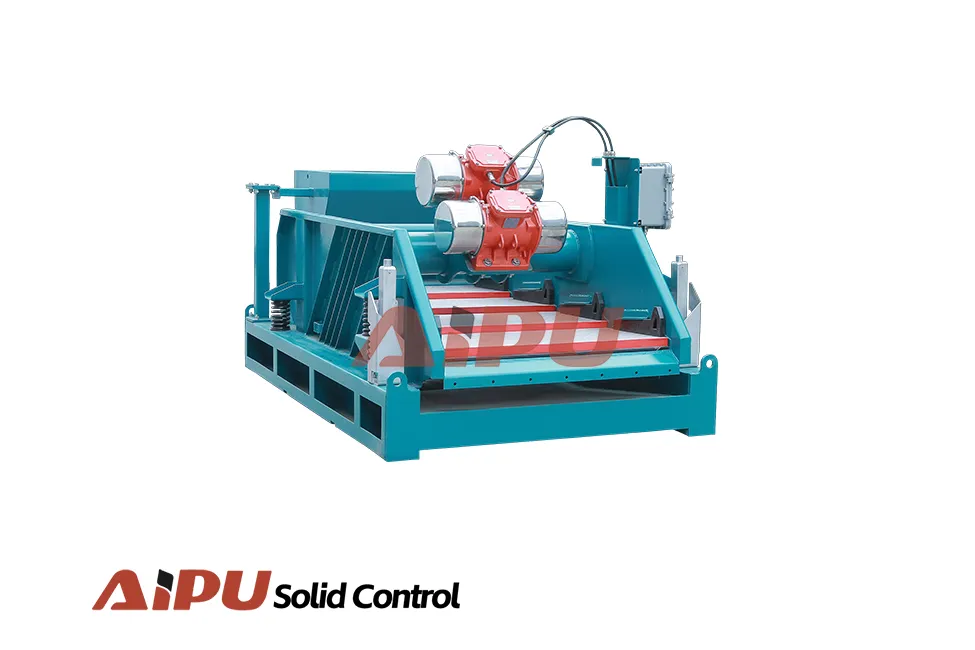
Portable shale shakers operate on the same fundamental principle as stationary models: utilizing high-frequency, linear motion to convey drilled solids across a vibrating screen deck while allowing cleaned fluid to pass through. The key technological adaptation is the integration of this system into a compact, robust, and often skid-mounted package. They utilize balanced elliptical or linear motion vibrators to maximize screen conveyance and fluid throughput despite a smaller footprint.
Key Components and Specifications
Modern portable shakers are defined by specific design features and specs that enable their mobility and performance.
- Compact Frame: Constructed from high-strength, lightweight steel with integrated lifting points.
- Power System: Often feature modular, quick-connect electric or hydraulic motor drives (typically 5-15 HP).
- Deck Configuration: Commonly single or dual-deck designs with screen areas ranging from 12 to 40 sq. ft.
- Transport Dimensions: Engineered to meet standard road transport regulations for width and height.
- Integrated Plumbing: Features quick-connect flowline and discharge fittings for rapid rig-up.
Operational Benefits for Mobile Rigs
The deployment of purpose-built portable shale shakers delivers significant field advantages.
- Reduced Mobilization Time: Faster rig-up/rig-down cycles between well sites.
- Lower Transportation Costs: Compact design decreases load counts and simplifies logistics.
- Maintained Drilling Fluid Integrity: Ensures effective solids removal even in limited-space applications, protecting downstream equipment and reducing fluid costs.
- Adaptability: Suitable for a wide range of mobile applications, from coil tubing and workover rigs to exploratory drilling.
Industry Applications and Deployment
Portable shale shakers are indispensable across various mobile drilling scenarios. They are critical for workover and well servicing operations where space is constrained. In exploratory drilling, they allow for rapid deployment of a complete solids control system. They are also increasingly used in remote access drilling, where equipment must be broken down for helicopter transport, and on smaller modular rigs designed for factory-built, skid-mounted systems.
Maintenance and Durability Considerations
Given the increased handling and transport cycles, maintenance focus shifts toward ruggedness and simplicity. Key considerations include the use of sealed, high-duty-cycle vibrator bearings, reinforced screen tensioning systems, and corrosion-resistant coatings. Regular inspection of structural welds, motor mounts, and electrical connections is paramount. The design emphasis is on minimizing daily maintenance points to align with fast-paced mobile rig schedules.
Conclusion: Enabling Agile and Efficient Operations
Portable shale shaker technology is a cornerstone of efficient mobile drilling, transforming solids control from a static, bulky process into a dynamic, integrated system. By delivering full-scale separation performance in a compact and rapidly deployable package, these units provide substantial logistical and economic benefits. As drilling campaigns target more challenging and remote locations, innovations in shaker portability will continue to enhance the flexibility and cost-effectiveness of mobile rig operations.