
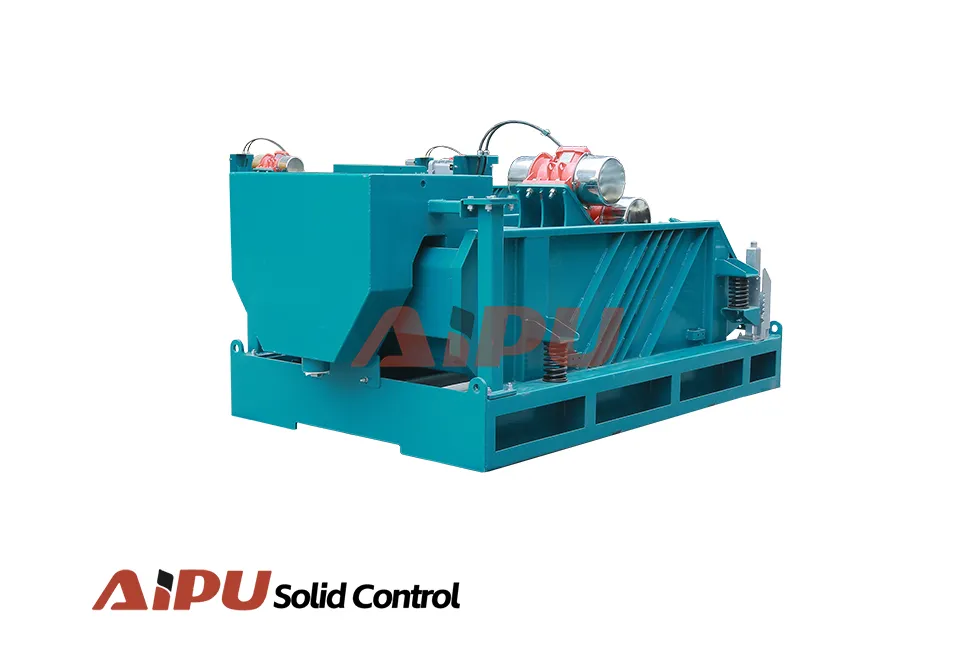
Introduction to Spring Isolation Systems
In the demanding environment of solids control, shale shaker performance is paramount. Spring isolation systems are a critical technology designed to mitigate the transmission of destructive vibration from the vibrating basket to the shaker's substructure and rig floor. By effectively managing these dynamic forces, these systems enhance screening efficiency, protect ancillary equipment, and significantly reduce structural fatigue, leading to improved operational reliability and cost savings.
Technical Working Principle
The system operates on the principle of tuned mass damping. Coil or rubber shear springs are strategically mounted between the shaker's vibrating basket and its stationary base. These springs are calibrated to the shaker's operating frequency (commonly 900-1200 RPM for linear motion shakers). When the basket vibrates, the isolation springs absorb and dissipate the oscillatory energy, preventing it from transferring to the supporting structure. This creates a stable platform for the shaker while the basket operates at its designed G-force, typically 4-6 G's for fine screen applications.
Key Components and Specifications
A robust isolation system comprises several precision elements. Key specifications directly impact performance and longevity.
- Spring Units: High-carbon steel coil springs or elastomeric shear blocks, rated for specific dynamic loads and deflection.
- Isolation Frequency: System is tuned below the shaker's operating frequency, often to 3-5 Hz, to prevent resonance.
- Damping Elements: Integrated rubber buffers or friction pads to control spring oscillation and settle-out time.
- Mounting Assemblies: Heavy-duty brackets and fasteners designed to withstand constant cyclic loading and harsh environments.
Operational Benefits
Implementing a properly designed spring isolation system delivers measurable field advantages that impact both performance and economics.
- Enhanced Screen Life: Stable vibration prevents "walking" and ensures even distribution of drilling fluid, reducing blinding and wear.
- Reduced Structural Stress: Minimizes vibration-induced cracks in rig floors and shaker support structures, lowering maintenance costs.
- Improved Safety & Environment: Less vibration spillage and a more stable work platform enhance site safety and housekeeping.
- Increased Capacity: Allows shakers to operate at optimal performance without compromising rig integrity, supporting faster drilling rates.
Industry Applications and Trends
Spring isolation is now standard on high-performance linear and balanced elliptical shale shakers, especially critical in high-intensity drilling operations. Its application is vital for:
- Offshore platforms where minimizing dynamic load on the deck structure is a safety and design imperative.
- Extended-reach and high-pressure, high-temperature (HPHT) wells requiring continuous, reliable solids control.
- Modular skid-mounted shaker systems, where isolation protects integrated piping and electrical systems during transport and operation.
Maintenance Considerations
Proactive maintenance ensures sustained isolation performance. Regular inspections should focus on spring integrity, checking for corrosion, cracking, or permanent set. Mounting bolts must be torqued to manufacturer specifications to prevent fretting and failure. Worn or degraded isolation elements should be replaced in matched sets to maintain system balance and prevent uneven loading on the shale shaker structure.
Conclusion
Spring isolation systems represent a mature yet essential innovation in shale shaker technology. By decoupling harmful vibration from critical infrastructure, they directly contribute to increased equipment uptime, reduced non-productive time (NPT), and lower total cost of ownership. As drilling programs push into more challenging environments, the role of effective vibration management through robust isolation will remain a cornerstone of efficient and reliable solids control.