
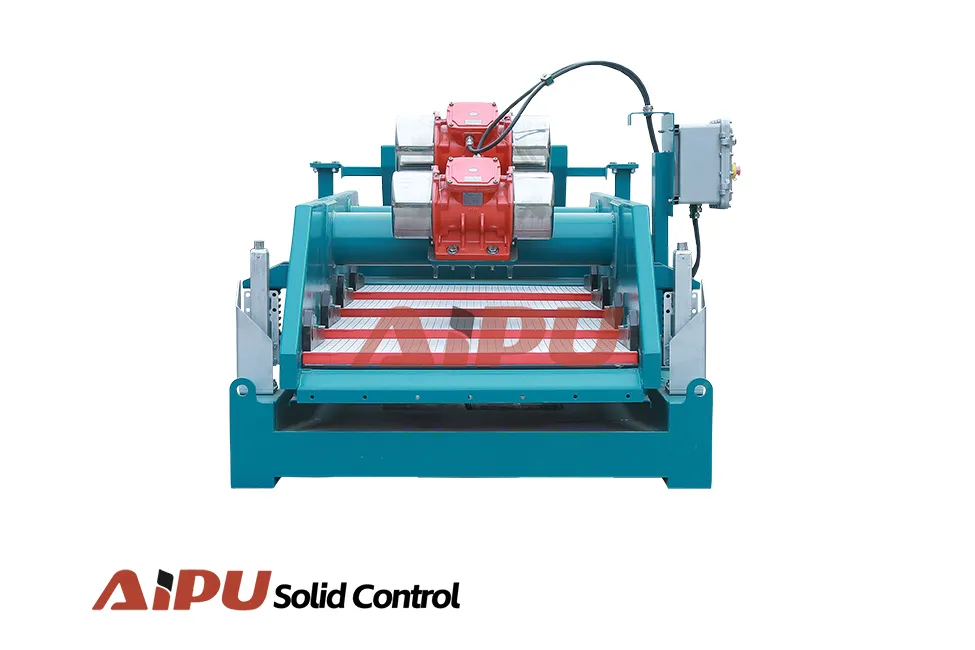
Introduction to shale shaker Motion Patterns
Shale shaker motion patterns are fundamental to solids control efficiency, directly impacting cuttings conveyance, fluid recovery, and screen life. The chosen motion dictates the shaker's ability to handle diverse drilling fluid properties and solids loads, making its selection a critical operational decision for drilling engineers.
Technical Working Principle of Motion Systems
Motion is generated by vibratory motors with synchronized counter-rotating weights. The vector sum of their centrifugal forces creates a specific directional impulse. The pattern—linear, elliptical, or circular—is determined by the motor configuration, axis orientation, and phasing of the weights, controlling how cuttings travel across the screen surface.
Primary Motion Pattern Types and Specifications
Modern shakers employ three core motion patterns, each with distinct technical parameters and performance envelopes.
- Linear Motion: Provides a straight-line, aggressive conveyance. Ideal for high-flow rate, unweighted muds. Screen angles typically range from -1° to +5°. Acceleration is high, often 4-6 G's.
- Elliptical Motion: Offers a balanced combination of conveyance and liquid throughput. The elliptical path varies from long, narrow ellipses for faster transport to near-circular for better liquid recovery. Common for weighted muds.
- Circular Motion: Characterized by a uniform circular vibration, maximizing fluid recovery and screen contact time. Best for dewatering and finishing applications. Operates at lower deck angles, usually 0° to -2°.
Operational Benefits and Efficiency Gains
Selecting the optimal motion pattern directly translates to cost savings and performance.
- Linear Motion: Maximizes solids throughput and screen capacity, reducing the need for multiple units.
- Elliptical/Circular Motions: Enhance liquid recovery, minimizing expensive mud losses and improving rheological control.
- Proper motion selection extends screen life by reducing blinding and optimizing solids discharge.
Industry Applications and Selection Criteria
Application dictates the preferred motion pattern. Linear motion shakers are standard on primary, high-capacity scalping decks. Elliptical motion is favored for primary and secondary stages with weighted, non-aqueous fluids (NAF). Circular motion units are specialized for tertiary drying or underflow dewatering. Modern "multi-motion" shakers allow operators to switch patterns to adapt to changing wellbore conditions.
Maintenance Considerations for Motion Systems
Vibratory system integrity is paramount. Regular maintenance includes checking motor mount integrity and torque, inspecting vibration isolators for degradation, and monitoring bearing temperatures. Proper motor synchronization is critical; failure can cause destructive non-linear motion, leading to premature screen failure and structural damage.
Conclusion: Optimizing Solids Control Strategy
Understanding shale shaker motion patterns is not merely academic; it is essential for designing an efficient solids control cascade. The trend toward combinatory and adjustable motion machines provides unparalleled flexibility, allowing engineers to dynamically optimize solids removal efficiency, conserve drilling fluid, and lower overall well construction costs.