
Introduction
In solids control, the shale shaker is the primary defense for removing drilled cuttings. Its efficiency is fundamentally governed by G-force, a critical parameter representing the acceleration applied to the screen deck. Understanding and optimizing G-force is essential for maximizing solids removal, improving fluid properties, and reducing overall drilling costs.
Technical Working Principle
G-force (Gs) quantifies the intensity of the vibratory motion. It is calculated as the product of stroke length and the square of RPM, divided by a constant. Unlike simple vibration amplitude or frequency alone, G-force combines these elements to describe the total separation energy imparted to the fluid-solids mixture. Higher G-forces increase the transport velocity of cuttings across the screen and enhance the probability of a particle passing through a screen opening.
Key Components and Specifications
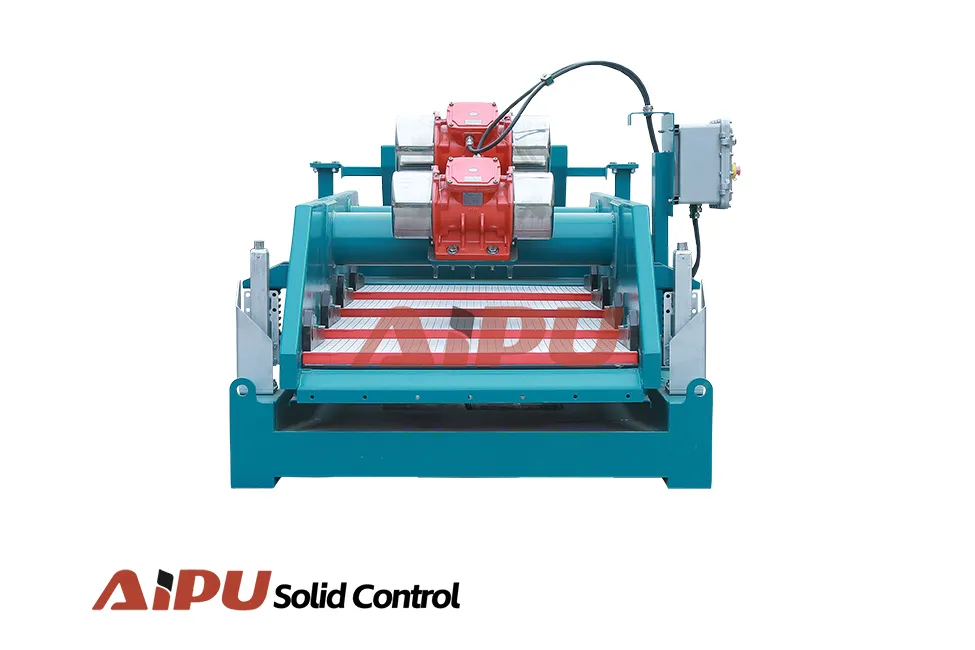
Modern high-G shakers achieve forces typically ranging from 5.0 to 7.5 Gs, a significant increase over traditional units. Key specifications include:
- Vibration Motors: Dual, adjustable-speed motors enabling linear, elliptical, or circular motion.
- Screen Deck Angle: Adjustable deck angle (often -1° to +5°) to control solids retention time.
- Screen Mesh: Fine screens (down to 200+ mesh) can be utilized effectively with higher, controlled G-forces.
- Structural Frame: Robust construction to withstand sustained high-vibration loads.
Operational Benefits
Optimizing G-force delivers direct operational and economic advantages:
- Enhanced Solids Removal: Superior removal of fine solids, leading to cleaner drilling fluid.
- Reduced Fluid Loss: Less whole mud discarded with cuttings, lowering fluid treatment costs.
- Increased Screen Life: Proper G-force prevents blinding and allows efficient use of finer screens.
- Improved Downhole Performance: Cleaner fluid reduces wear on pumps, drill string, and bit.
Industry Applications
High-G shale shaker technology is particularly vital in challenging drilling environments. In extended-reach (ERD) and high-pressure, high-temperature (HPHT) wells, maintaining pristine fluid properties is non-negotiable. Furthermore, for environmental and cost-sensitive operations, maximizing solids control at the primary stage minimizes waste volume and subsequent processing costs.
Maintenance Considerations
Sustaining optimal G-force requires disciplined maintenance. Regular inspection of vibration motor mounts, screen tension, and deck integrity is crucial. Worn or unbalanced motors will not deliver the designed G-force, leading to rapid performance decline and potential screen failure. A proactive maintenance schedule ensures consistent separation efficiency.
Conclusion
G-force is the definitive metric for evaluating shale shaker performance. By selecting equipment with appropriate, adjustable G-force capabilities and maintaining it rigorously, drilling engineers can achieve superior solids control. This directly translates to enhanced drilling efficiency, significant cost savings in fluid management, and improved wellbore conditions, solidifying the high-G shale shaker's role as a cornerstone of modern drilling operations.