
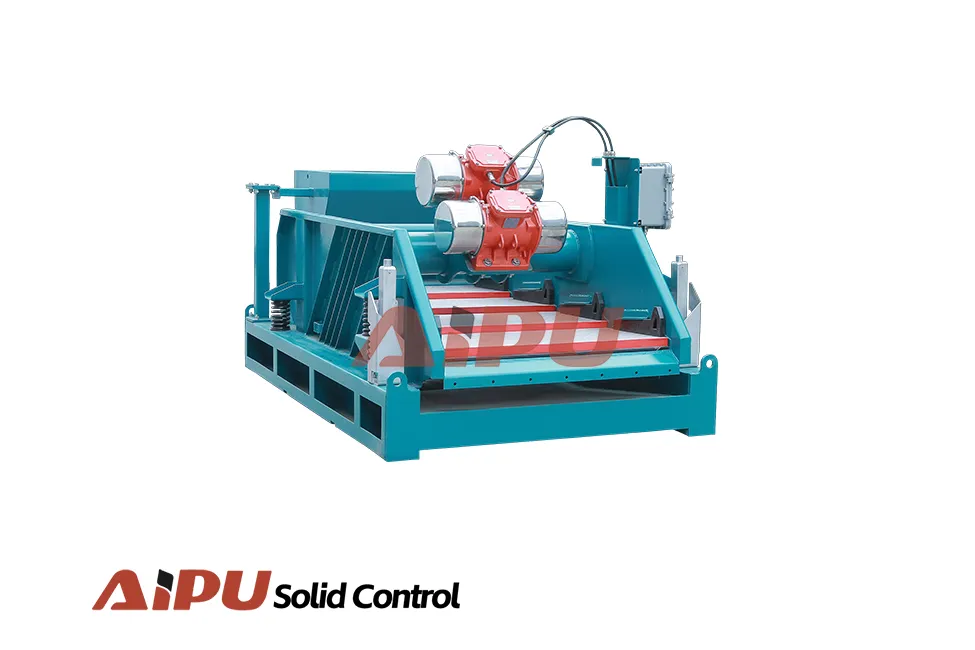
Shale shakers are the workhorses of drilling solids control systems, responsible for the critical first stage of solids separation in oilfield drilling operations. Understanding how these machines work is essential for optimizing their performance and ensuring efficient drilling fluid management. This article delves into the working principles, components, and operational mechanisms of shale shakers in oilfield applications.
The Basic Working Principle
At its core, a shale shaker operates on the principle of mechanical vibration combined with screen separation. When drilling fluid returns to the surface carrying drilled cuttings, it flows into the shale shaker's feed box, which distributes it evenly across a vibrating screen deck. The vibration causes the fluid to cascade over the screen while simultaneously agitating the solids, allowing the fluid to pass through the screen mesh while retaining solid particles above a certain size.
The separated solids (drilled cuttings) are transported across the screen by the vibration and discharged from the shaker, while the cleaned fluid is collected beneath the screen for reuse in the drilling process. This simple yet effective mechanism forms the foundation of all shale shaker designs, regardless of their specific configuration.
Key Components and Their Functions
To understand how a shale shaker works, it's important to examine its key components and their roles in the separation process:
1. Feed Box
The feed box is the entry point for returning drilling fluid. It is designed to distribute the fluid evenly across the width of the screen deck, ensuring maximum utilization of the screen surface. Some advanced feed boxes incorporate flow control mechanisms to adjust the fluid distribution based on drilling conditions.
2. Vibrating Deck
The deck is a rigid frame that holds the screen panels and transmits vibration from the motors to the screen surface. It is typically constructed from high-strength steel to withstand the continuous vibration and harsh drilling environment. The deck angle can often be adjusted to control the flow rate of fluid and solids across the screen.
3. Screen Panels
Screens are the heart of the shale shaker, responsible for the actual separation of solids from the drilling fluid. They consist of a frame supporting a woven mesh or synthetic membrane with precise opening sizes. The screen mesh size determines the smallest particle size that will be retained on the screen.
Modern screens use a variety of materials, including stainless steel wire mesh, composite materials, and layered designs. Some screens feature a fine mesh layer supported by a coarser backing mesh for enhanced durability and performance.
4. Vibration Motors
Electric motors generate the mechanical vibration that powers the separation process. Shale shakers typically use two counter-rotating motors mounted on opposite sides of the deck. The motors are equipped with eccentric weights that create centrifugal force when rotated, causing the deck to vibrate.
5. Vibration Mechanism
The vibration mechanism converts the rotational motion of the motors into linear, elliptical, or circular vibration of the screen deck. This is achieved by adjusting the position and angle of the eccentric weights on the motor shafts. Different vibration patterns offer distinct advantages for various drilling conditions:
- Linear Motion: Provides excellent solids transport and is suitable for most drilling applications.
- Elliptical Motion: Combines linear and circular motion for improved fluid throughput and solids separation.
- Circular Motion: Ideal for handling high-viscosity fluids and sticky solids.
6. Fluid Collection System
Beneath the screen deck, a collection pan or tank captures the fluid that passes through the screen. This cleaned fluid is then channeled to the next stage of the solids control system (typically desanders or desilters) or recirculated back into the drilling process.
7. Solids Discharge Chute
The discharge chute is located at the end of the screen deck and guides the separated solids off the shaker for further processing or disposal. It is designed to minimize spillage and ensure efficient removal of cuttings.
The Separation Process in Detail
The shale shaker separation process can be broken down into several distinct stages:
- Fluid Distribution: Return drilling fluid enters the feed box, which spreads it evenly across the width of the screen deck.
- Initial Separation: As the fluid hits the vibrating screen, the largest and heaviest particles are immediately retained on the screen surface.
- Fluid Flow and Agitation: The vibration causes the fluid to flow in a thin film across the screen while simultaneously agitating the solids. This agitation prevents screen blinding (clogging) and ensures efficient fluid penetration through the screen mesh.
- Particle Transport: The vibration propels the retained solids across the screen toward the discharge chute. The speed of transport depends on the vibration intensity, deck angle, and fluid viscosity.
- Final Separation: As the fluid continues its journey across the screen, smaller particles are progressively separated, with the smallest particles passing through the screen with the fluid.
- Solids Discharge: The separated solids reach the end of the screen deck and are discharged through the chute for further processing or disposal.
- Fluid Collection: The cleaned fluid is collected beneath the screen and sent to the next stage of the solids control system.
Factors Affecting Shale Shaker Performance
Several factors influence the efficiency and effectiveness of a shale shaker in oilfield drilling operations:
1. Screen Selection
Choosing the right screen mesh size and type is critical for optimal performance. The screen must be fine enough to remove the desired particle size but not so fine that it restricts fluid flow or causes excessive blinding.
2. Vibration Parameters
The frequency, amplitude, and pattern of vibration significantly impact separation efficiency. Higher frequencies are generally better for finer particle separation, while larger amplitudes improve solids transport and reduce screen blinding.
3. Deck Angle
The angle of the screen deck affects the flow rate of fluid and solids across the screen. Steeper angles increase the flow rate but reduce the residence time of fluid on the screen, potentially reducing separation efficiency. Shallower angles provide longer residence time but may cause solids to accumulate on the screen.
4. Fluid Properties
The viscosity, density, and chemical composition of the drilling fluid influence how effectively it can be separated from solids. Higher viscosity fluids are more challenging to process and may require adjustments to vibration parameters or screen selection.
5. Feed Rate
The rate at which drilling fluid enters the shaker must be matched to the shaker's capacity. Overfeeding can overwhelm the screen, reducing separation efficiency and causing fluid to bypass the screen (known as "shaker overflow"). Underfeeding wastes screen capacity and increases operational costs.
6. Solids Characteristics
The size, shape, and composition of drilled cuttings affect how they interact with the screen. Sharp, angular particles tend to blind screens more easily than round, smooth particles. Sticky clays and shales can also cause screen blinding issues.
Advanced Shaker Technologies
Modern shale shakers incorporate several advanced technologies to enhance performance and adapt to changing drilling conditions:
1. Variable Speed Vibration
Some shale shakers feature variable speed motors that allow operators to adjust vibration frequency based on drilling conditions, optimizing performance for different fluid types and solids characteristics.
2. Automated Screen Tensioning
Proper screen tension is essential for optimal performance. Automated tensioning systems maintain consistent screen tension, extending screen life and improving separation efficiency.
3. Quick-Change Screen Systems
Advanced screen retention systems allow for rapid screen changes, reducing downtime during screen maintenance or replacement.
4. Dual-Slope Decks
Some shakers feature decks with two different angles, allowing for improved fluid flow and solids transport in challenging conditions.
5. Vacuum Assistance
Vacuum-assisted shale shakers use a vacuum system beneath the screen to enhance fluid recovery, particularly in high-gas environments or when processing low-gravity solids.
Conclusion
Shale shakers play a vital role in oilfield drilling operations, serving as the first line of defense in the solids control process. By understanding how they work—from their basic separation principle to the intricate interaction of their components—drilling operators can optimize their performance, reduce operational costs, and ensure efficient drilling fluid management.
As drilling conditions become more challenging and environmental regulations more stringent, the importance of efficient shale shaker operation continues to grow. By investing in high-quality equipment, implementing proper maintenance practices, and training personnel on optimal operating procedures, drilling companies can maximize the effectiveness of their shale shakers and achieve significant improvements in overall drilling performance.
The evolution of shale shaker technology, with advancements in vibration systems, screen design, and automation, continues to push the boundaries of solids control efficiency. Understanding these technologies and their applications is essential for staying competitive in today's demanding oil and gas industry.