
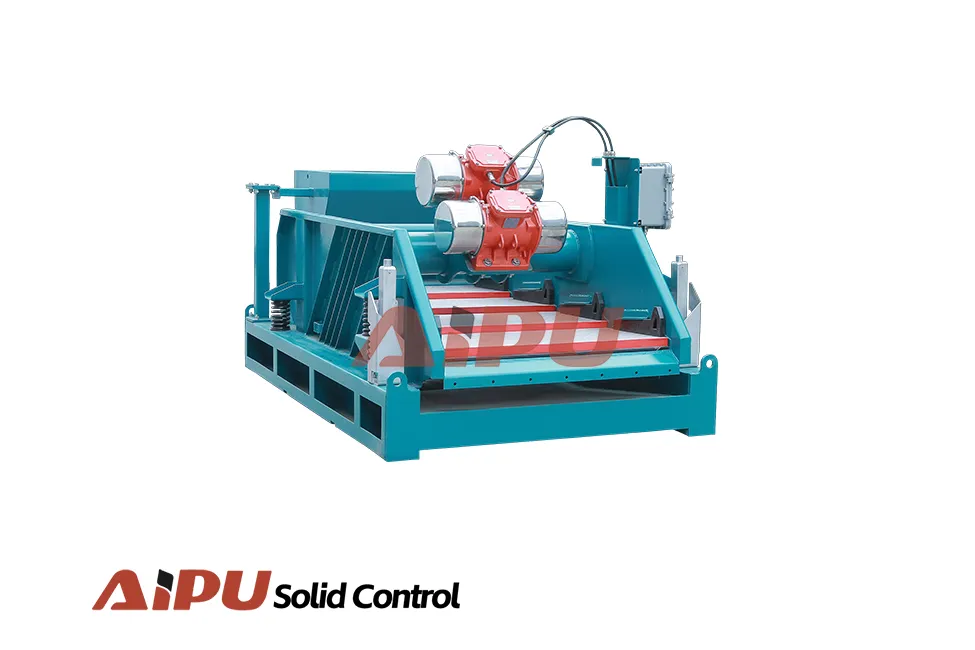
In the complex world of oil and gas drilling operations, efficient solids control is paramount to maintaining drilling fluid properties, reducing operational costs, and ensuring environmental compliance. At the forefront of every solids control system lies a critical piece of equipment: the shale shaker. This article provides a comprehensive overview of what a shale shaker is, its role in drilling solids control, and its importance in modern drilling operations.
Definition of a Shale Shaker
A shale shaker is a mechanical device designed to separate solid particles (drilled cuttings) from drilling fluid (mud) during drilling operations. It is the primary solids control equipment, responsible for removing the largest and heaviest particles from the drilling fluid as it returns to the surface after passing through the wellbore.
Shale shakers operate on the principle of mechanical vibration combined with screen separation. The device consists of a vibrating deck equipped with specially designed screens, which allow fluid to pass through while retaining solid particles above a certain size. The separated solids are then discharged for further processing or disposal, while the cleaned fluid is recirculated back into the drilling system.
The Role of Shale Shakers in Drilling Solids Control
Shale shakers play a multifaceted role in the drilling solids control process:
- Primary Solids Removal: As the first stage in the solids control system, shale shakers remove 60-80% of the total drilled solids, reducing the burden on downstream equipment.
- Drilling Fluid Recovery: By efficiently separating solids from the drilling fluid, shale shakers help recover valuable fluid that can be reused, minimizing the need for fresh fluid makeup.
- Protection of Downstream Equipment: By removing large, abrasive particles, shale shakers protect expensive downstream equipment such as desanders, desilters, and centrifuges from excessive wear and damage.
- Maintenance of Fluid Properties: Clean drilling fluid maintains its desired viscosity, density, and chemical properties, ensuring optimal drilling performance and wellbore stability.
- Environmental Compliance: Effective solids control reduces the volume of drilling waste that needs to be handled and disposed of, helping operators comply with environmental regulations.
Key Components of a Shale Shaker
Modern shale shakers are sophisticated pieces of equipment with several key components:
- Vibrating Deck: The deck holds the screen panels and generates high-frequency vibrations to facilitate solids separation and transport.
- Screen Panels: These are the heart of the shale shaker, with varying mesh sizes to separate different particle sizes. Modern screens are typically made of synthetic materials or stainless steel with precise opening sizes.
- Vibration Motors: These generate the mechanical vibrations that transfer to the deck and screen panels. They can be configured to produce different vibration patterns (linear, elliptical, or circular).
- Feed Box: Drilling fluid is introduced to the shale shaker through the feed box, which distributes the fluid evenly across the screen surface.
- Discharge Chute: Separated solids are discharged from the shaker through the discharge chute for further processing or disposal.
- Frame and Support Structure: Provides stability and support for all components, designed to withstand the harsh conditions of drilling operations.
Types of Shale Shakers
There are several types of shale shakers available, each designed for specific drilling conditions and applications:
- Linear Motion Shale Shakers: Use linear vibration to transport solids across the screen. They are versatile and suitable for most drilling applications.
- Elliptical Motion Shale Shakers: Combine linear and circular motion, providing excellent solids transport and separation efficiency.
- Circular Motion Shale Shakers: Use circular vibration, typically used in less demanding applications or for initial solids removal.
- Vacuum Shale Shakers: Incorporate a vacuum system to enhance fluid recovery, particularly in high-gas environments.
- Tandem Shale Shakers: Multi-unit systems designed for high-volume drilling operations, capable of processing large quantities of drilling fluid.
Importance of Shale Shaker Efficiency
The efficiency of a shale shaker directly impacts the overall performance of the solids control system and the drilling operation as a whole. Key factors affecting efficiency include:
- Screen Selection: Choosing the right screen mesh size and type for the specific drilling conditions and fluid properties.
- Vibration Parameters: Adjusting vibration frequency, amplitude, and pattern to optimize solids separation and transport.
- Deck Angle: The angle of the shaker deck affects the fluid flow rate and residence time on the screen, impacting separation efficiency.
- Feed Rate: Matching the fluid feed rate to the shaker's capacity to prevent screen overloading.
- Maintenance: Regular inspection and maintenance of screens, vibration motors, and other components to ensure optimal performance.
Modern Shale Shaker Technology
Advancements in shale shaker technology have led to significant improvements in efficiency, reliability, and performance. Modern shale shakers feature:
- High-G Force Vibration: Advanced vibration systems that generate higher G-forces, improving solids separation efficiency.
- Quick-Change Screen Systems: Designed for rapid screen replacement, reducing downtime during screen changes.
- Intelligent Control Systems: Automated systems that monitor and adjust shaker parameters in real-time for optimal performance.
- Durable Materials: High-strength materials that withstand the harsh conditions of drilling operations, increasing equipment lifespan.
- Energy-Efficient Designs: Modern shakers are designed to consume less energy while maintaining high performance.
Conclusion
A shale shaker is a fundamental component of any drilling solids control system, playing a critical role in separating drilled cuttings from drilling fluid. Its efficiency directly impacts drilling performance, operational costs, and environmental compliance.
Understanding what a shale shaker is and its importance in the drilling process is essential for anyone involved in oil and gas operations. As drilling conditions become more challenging, the role of shale shakers continues to evolve, with ongoing advancements in technology leading to more efficient, reliable, and cost-effective solutions.
By investing in high-quality shale shakers and optimizing their performance, drilling operators can achieve significant improvements in drilling efficiency, reduce operational costs, and ensure environmental responsibility in their operations.